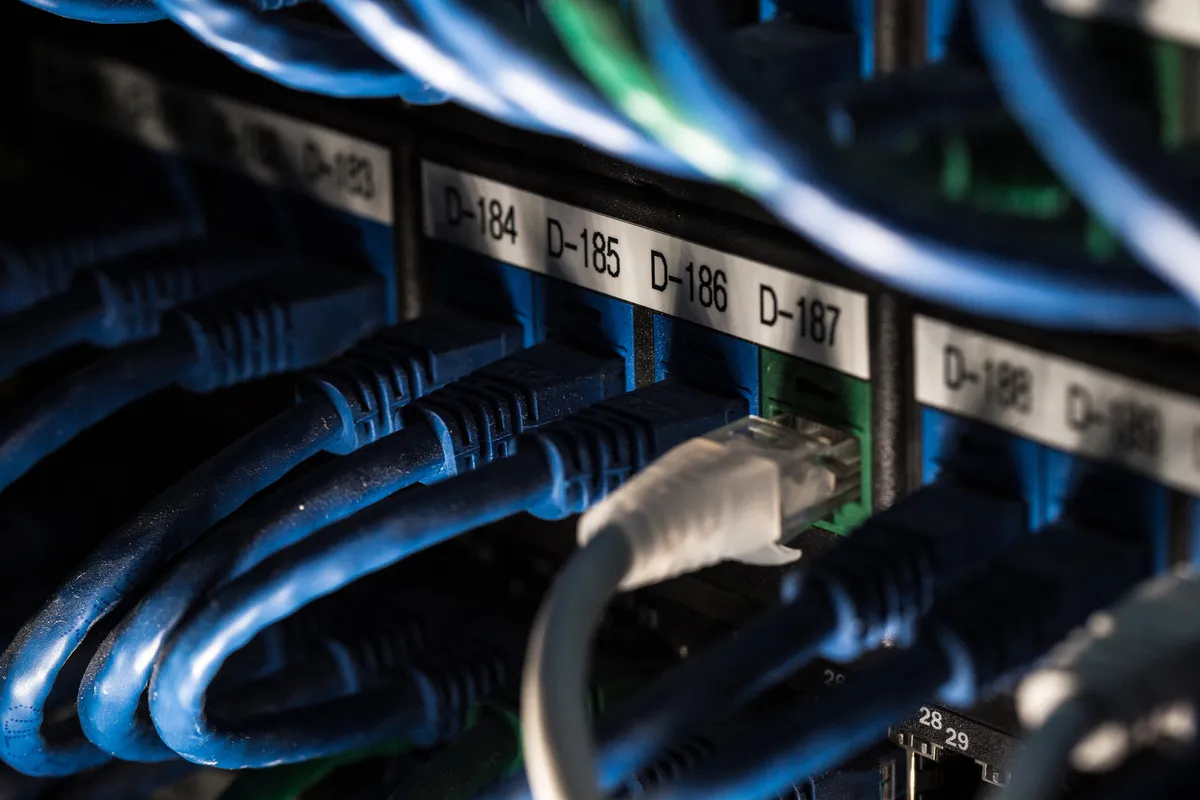
Illustrative scenario. A villa in San Teodoro has fibre internet, a router, access points and cameras powered by a PoE switch. A small UPS keeps the router running during a power cut, yet the owner loses remote camera access. The switch and fibre termination device have no backup power.
Map the complete path
A UPS is an uninterruptible power supply: it supports connected equipment for a limited time when mains power fails. In our example, reaching a camera remotely requires several components to work together. Map the path from the internet connection through to recording.
- Line termination: the fibre ONT, if separate, or the equipment required by the chosen connection.
- Router and switches: including intermediate switches along the path.
- PoE devices: access points and cameras powered over their network cables, whose consumption contributes to the supplying switch's load.
- Recorder: an NVR or other specified system, if the objective includes continued recording.
The picture changes if a camera records locally or some devices have independent power supplies. The map must therefore describe the installation, rather than simply list the products purchased.
Capacity and runtime are different questions
The Eaton UPS sizing guide distinguishes supported power from battery runtime under load. A VA rating alone does not tell you how many minutes the network will run. Compare the intended load with runtime data for the specific model.
The APC UPS buying guide explains that both watt and VA limits must be respected. A technician considers total consumption, suitable headroom and equipment compatibility. Avoid counting PoE devices twice if their consumption is already included in a measurement at the switch's power input.
Agree a testable objective
In this scenario, the owner wants networking and recording to continue for the period agreed in the design. That duration is a requirement to test, not a promise derived from a marketing specification. Also establish what should happen before the battery runs out, such as a controlled shutdown of storage equipment where supported.
The test and its report
- Inventory the actual connected loads and check battery condition, warnings and manufacturer guidance.
- Arrange a controlled test with the technician, following the UPS manual and avoiding improvised electrical work.
- During the test, check local networking, remote access and recording separately. Record any equipment that reboots or loses power.
- Check power restoration, service recovery and availability of the test recordings.
- Record observed runtime and test conditions, then agree when to repeat the inspection.
A UPS powers local equipment; it does not repair an internet provider fault or an upstream outage. For a complete plan, see monitoring and maintenance and, if a second connection is needed, connection continuity.