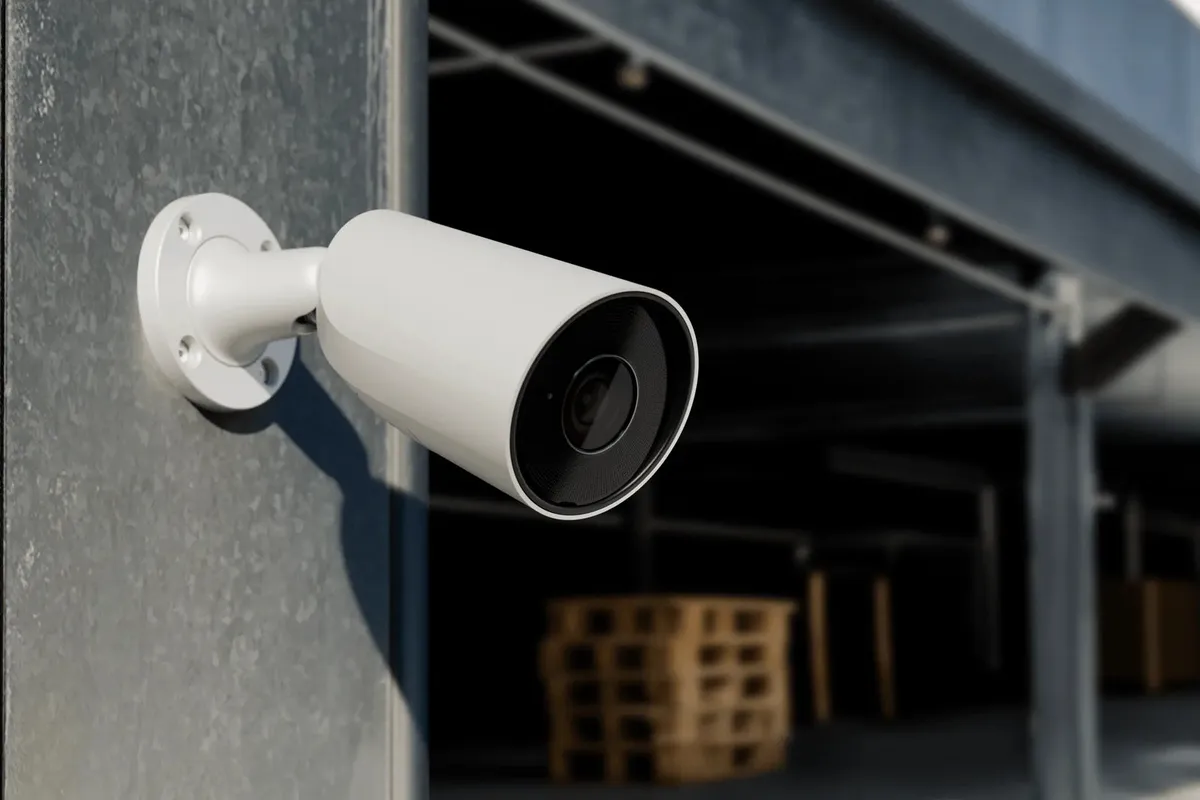
Illustrative scenario. A Costa Smeralda villa has one camera at its gate and another overlooking the driveway. Both look clear by day; at night, car headlights and a nearby wall change the scene. The owner wants to check a passage, but viewing a live feed on a phone does not establish that the required footage was recorded.
Define the question each view must answer
Write down the purpose of each view: observing whether someone enters the driveway, reconstructing a passage or checking an event at the gate. These are different objectives. In our scenario, the first test establishes whether the route remains visible as a person crosses the relevant area. Recognising faces or number plates requires specific criteria and testing; megapixel count alone cannot justify that promise.
Mark the relevant areas on a plan and choose points for the test walk. This makes later checks comparable after maintenance or a change of camera angle. Agree participants, times and recording areas beforehand, avoiding uninvolved people and irrelevant spaces.
Repeat the test in the actual lighting conditions
The Axis image-quality troubleshooting guide describes infrared reflections that can appear in night mode even when daytime images look normal. Nearby walls, dirt or droplets on a dome are among the factors to check. Before increasing illumination, the technician checks positioning, optical condition and settings.
The Axis lighting guide for network video helps distinguish visible and infrared lighting. For our acceptance test, the key question is the result: does the subject remain observable in the intended conditions, or do movement, shadows or headlights make the sequence unusable?
A five-step inspection
- Check time and status. Verify consistent time settings across cameras and recorder, and look for storage errors.
- Walk the agreed routes. Repeat the same path in daylight and after dark, with the villa's normal lighting.
- Find the recording. Open the relevant interval on the recorder, rather than relying on live view. With event-based recording, check that the footage includes what is needed to understand the event.
- Test an export. Export a short authorised test clip and open it on a device specified in the procedure.
- Record limitations. Document blind spots, reflections, missing sequences and corrections that need another test.
Retention and access belong in the design
This example does not prescribe a universal retention period. Establish the purpose, context and applicable requirements first; then size the storage and verify actual system behaviour. Identify who is allowed to view or export footage as well.
For a system review, see our IP video surveillance service. A floor plan, installed model details and a list of scenes to check help organise a focused survey, including an evening test where needed.